Kairos / On timing
There is a phrase we save exclusively for the funerals of ideas, never for their birthdays: "it was ahead of its time." Nobody has ever said it about something that worked.
And nobody, not once, has said the reverse — that "we were behind our time and still managed to blow it." It is the participation trophy of innovation: the little ribbon we pin on the corpse so we never have to admit the simpler thing. Nobody wanted it.
Take the electric scooter.
The scooter that ran a century late
In 2018, cities filled up almost overnight with electric scooters. Everyone talked about a "micromobility revolution," as if something had just been born. It hadn't. The first mass-produced motorized scooter, the Autoped, hit the streets of Long Island City in 1915. You stood on a platform, pushed the column forward to go, pulled back to brake, folded it to carry. If that rings a bell, it's because it is — almost millimeter for millimeter — the scooter you tripped over outside your door today.
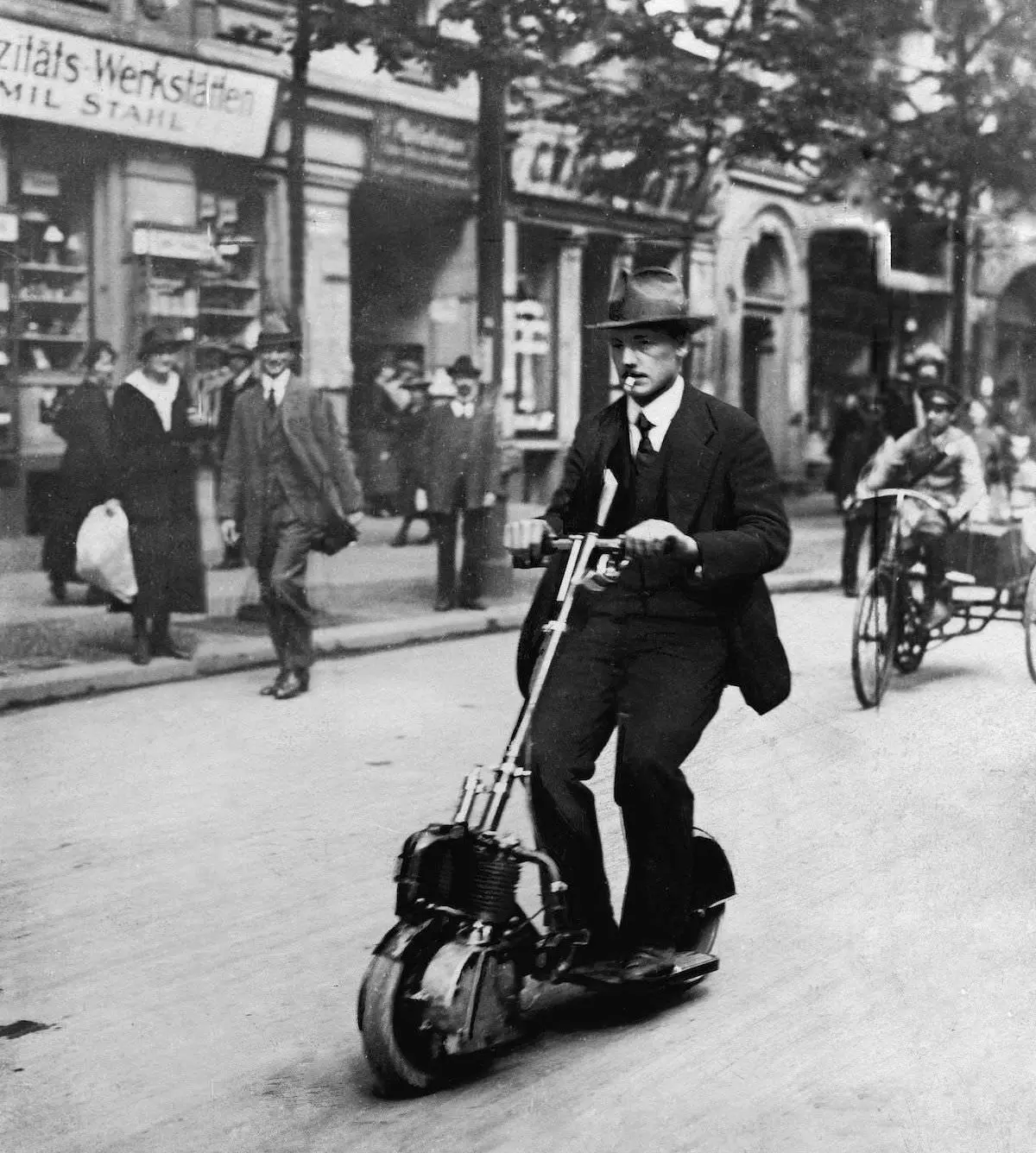
And the irony deepens: the Autoped came in an electric version too. Eveready — yes, the battery company — bought the design and built one. The electric scooter was not invented by a hoodie-wearing wunderkind in Silicon Valley. It already existed when your great-great-grandfather was in diapers.
It was even cool. So cool that "autopeding" became a verb. Suffragettes rode them to work as an act of liberation. Amelia Earhart posed on one. The ads promised, with the era's trademark restraint, that soon nobody would walk anywhere ever again.
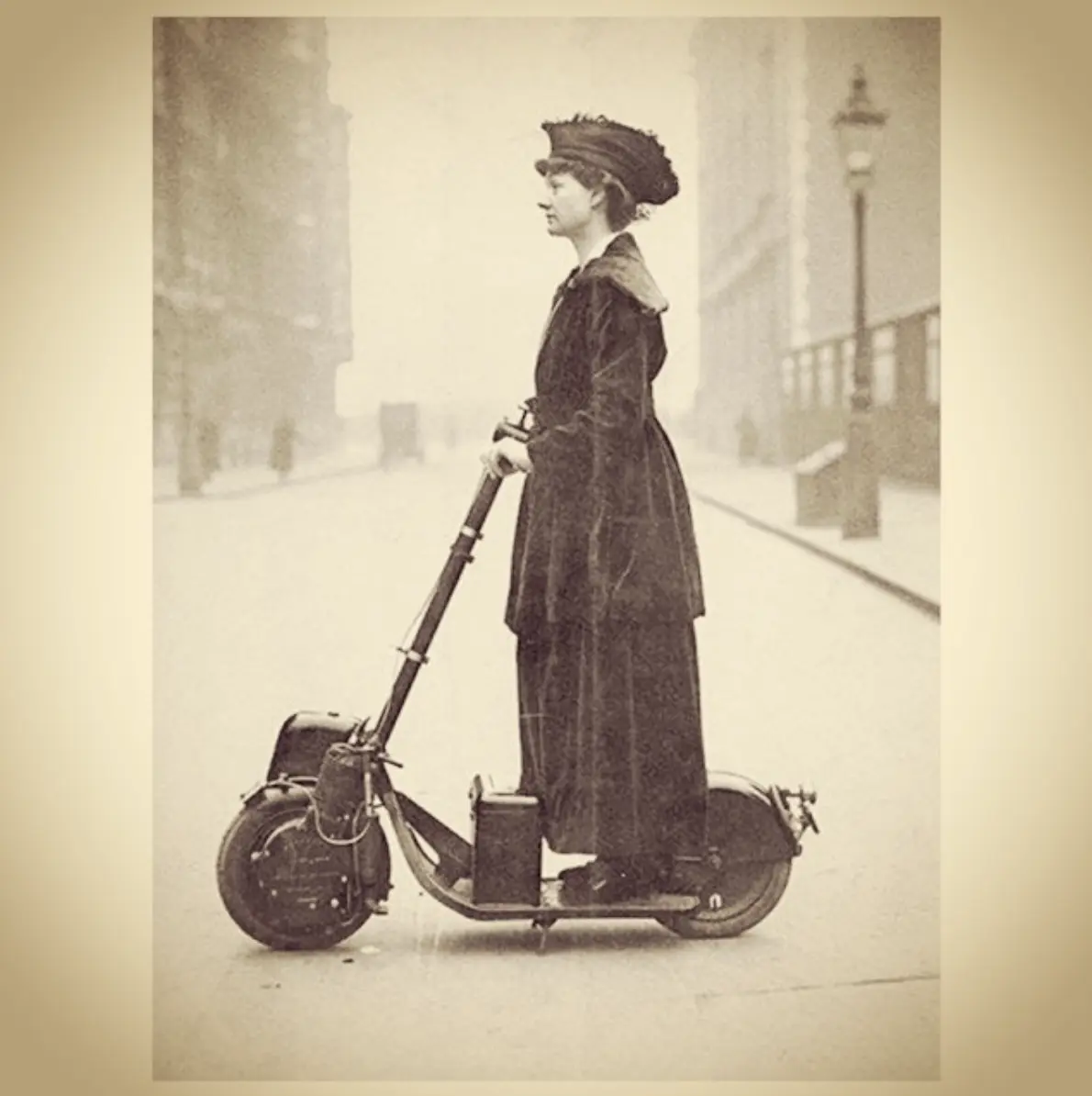
Did nobody walk? They did. The Autoped died around 1921 — not because it was a bad idea, but because the bicycle was cheaper, steadier, and didn't fling you into traffic at the first pothole. The idea was fine. The world was wrong.
The scooter didn't get smarter.
The battery did.
When the scooter came roaring back a century later, it hadn't grown any cleverer. Same dumb object: two wheels, a deck, a handlebar. What changed was everything boring around it — the lithium battery that finally packed real range into something light, the smartphone that knew where you stood, GPS that knew where the scooter was, the tap-to-pay that turned renting one into a two-second decision.
The visionary gets the credit, but the dirty work was done by a lithium cell. The "right moment" is rarely a moment of genius. It's the moment the slow, anonymous, deeply unglamorous infrastructure finally catches up with the imagination.
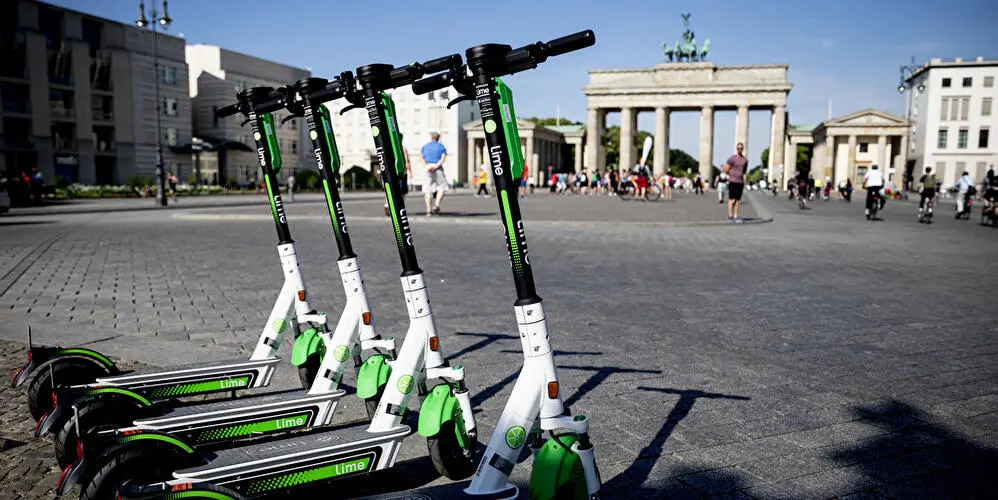
And the scooter isn't the exception. It's the rule.
Bill Gross graded hundreds of startups hunting for the one factor that separates winners from wreckage. He expected the idea, or the money. It was timing — by his count, 42% of the difference.
We had a word for this
Allow me a small flash of national pride, for once justified. The ancient Greeks had two words where we now make do with one. Chronos was the clock — quantity, duration, seconds ticking past indifferently whether anything happens or not. Kairos was something else: the right, ripe, decisive moment — the window that doesn't come back once it has closed.
Two kinds of time. Only one of them matters.
Χρόνος
Chronos
Quantity. Duration. The seconds you have in abundance and squander.
00:00:00
The Autoped had infinite chronos — a full hundred years of it.
Καιρός
Kairos
The one ripe moment. Miss it, and it shuts.
Hover to open the window. Notice how it closes on its own.
Nothing in the world is as powerful as an idea whose time has come.
— Victor Hugo
The reverse, which we never phrase quite so beautifully, is just as true: no idea, however brilliant, is worth anything if its time hasn't.
The trap in the comfort
Lovely. Reassuring, even. And because comfort is suspect, let's hold our breath. "It was too early" is the most convenient excuse ever invented: we remember the scooter that came back, and forget the thousand corpses that never did — not because they were ahead of their time, but because they were, quite simply, bad. The Segway promised to redesign our cities. It redesigned the mall cop.
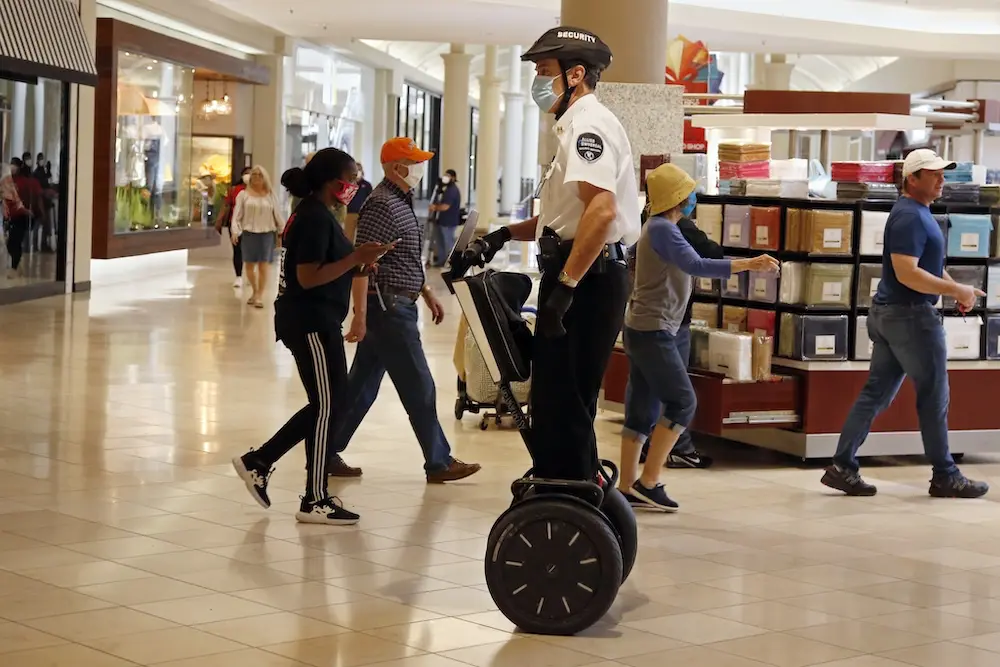
While you're living through it, the two look identical.
Here's the uncomfortable part: while you're living through it, "too early" and "just wrong" look identical. Which one it was, you only learn afterward — when somebody else cashes the check a century later. Which is why skeptics needle Gross, accusing his "timing" of being a story told in hindsight.
But that objection, looked at squarely, doesn't weaken the case for timing. It strengthens it. "You only see it in hindsight" means timing is so decisive, and so hard to grasp while it's happening, that its power only reveals itself once it has passed. It's not a detail lost in the noise. It's the factor that — every single time, in retrospect but beyond dispute — turns out to have decided everything.
The idea is rarely the hero of the story. It's the hero we prefer, because it flatters our faith in genius, in the "eureka," in the lone visionary. But the scooter wasn't waiting for a smarter inventor. It had already been invented. It was waiting for its world. And the world, when it isn't ready, forgives no brilliance at all.
The word we were missing had been there all along. Not chronos, which we have in abundance and squander. Kairos: the single moment which, if you fail to meet it, lets you be completely right for an entire century — and heard by no one.